• Skip to primary navigation
  • Skip to main content
  • Skip to footer
  • 2301 Lunt Ave, Elk Grove Village, IL 60007 |
  • 847.298.7710

Nu-Way corporate website

  • Home
  • About
  • SERVICES
  • CAPABILITIES
  • News
  • Portfolio Gallery
  • Contact Us
  • Careers
  • RFQ
Home » Archives for admin » Page 2

admin

Driving Quality and Efficiency With Vertically Integrated Manufacturing

Manufacturing custom metal components and complex sheet metal products can involve many steps and processes. While some manufacturers may focus on providing a single service, this creates inefficiencies that often contribute to increased lead times and costs for customers. Working with a vertically integrated manufacturing partner can be a strong advantage, as vertical integration often results in shorter lead times, lower costs, and better-quality parts and products.

At Nu-Way Industries, we’ve grown thoughtfully and intentionally into a vertically integrated manufacturing partner, expanding our capabilities to serve our customers from end to end for all aspects of precision metal fabrication. By providing comprehensive contract manufacturing services – spanning product design services to punching, laser cutting, sheet metal forming, sheet metal finishing, and final assembly – we’re able to offer faster, simpler, and more cost-effective manufacturing solutions to fully meet your custom metal fabrication needs.

The Benefits of Vertically Integrated Manufacturing

Vertically integrated manufacturing

When you’re looking for a company to provide contract manufacturing services, you’re likely to encounter many specialty shops that only perform one aspect of manufacturing. This means that they’ll either need to outsource certain operations or that you’ll need to find additional vendors capable of bringing your project to completion. 

However, vertically integrated manufacturing solves this problem. A truly skilled manufacturing partner can leverage their in-house resources, capabilities, and expertise to create a better, fully-finished product for you. 

Here are some of the benefits of vertically integrated manufacturing that you can expect when you work with a manufacturing partner like Nu-Way Industries: 

Efficient End-to-End Manufacturing

With vertically integrated manufacturing, your parts aren’t moving from supplier to supplier for each facet of their fabrication and finishing. With our extensive range of manufacturing capabilities, we utilize our existing in-house resources — outsourcing only for very specific processes, which we manage — to quickly and efficiently move parts through their various phases of production.

Shorter Lead Times

Directly tied to the efficiency that vertically integrated manufacturing creates are shorter lead times. With our size and range of capabilities, we’re able to provide in-house services for precision CNC machining, as well as sheet metal forming, stamping, laser cutting, punching, grinding, TIG, MIG and laser welding, finishing, and assembly, allowing us to progress from raw material to finished product with speed and efficiency.

Reduced Logistics Costs

With fewer outside processing requirements, there’s naturally going to be less of a need to ship parts between external vendors. While the shorter lead times might be one of the main benefits of vertically integrated manufacturing, reduced logistics costs can be an added advantage, especially when it comes to larger products that each take up a whole pallet and require more time and labor to move. With these larger products, we also typically mount the finished product onto a pallet that can move directly through our customers’ assembly or packaging lines. Not only does this reduce the risk of damage, but it also saves time and effort by eliminating the need for repalletization.

Larger Production Volume & Size Capabilities 

Vertically integrated manufacturing requires investment not only in additional equipment, but in larger facilities as well. However, it’s precisely the physical size that vertical integration requires that allows us to handle volume production with ease. With these larger facilities, we’re also able to manufacture larger sheet metal products, like server racks, that would pose storage issues for smaller shops to manufacture at scale.

Better Quality Assurance

When it comes to quality, the more work we can do in house, the more we can control. This allows us to closely monitor every aspect of the manufacturing process and communicate any changes or special requirements across teams with ease. Additionally, having all of the processes under our own roof allows us to quickly identify and resolve any issues proactively, providing you with a single source of responsibility when it comes to quality.

Leveraging Nu-Way Industries’ Vertically Integrated Manufacturing Capabilities

Vertically integrated manufacturing offers a number of benefits for both the manufacturer and the customer. Not only does vertically integrated manufacturing typically reduce lead times and logistics costs, but it also allows you to work with a manufacturing partner that ensures efficiency and quality at every stage of production. 

As a Chicago metal fabrication company with a comprehensive range of in-house capabilities, we serve as a true manufacturing partner that serves all of our customers’ custom metal fabrication needs. By leveraging our end-to-end capabilities to manufacture precision metal products, Nu-Way Industries can provide you with a one-stop manufacturing experience and be your single source for CNC machining and sheet metal fabrication services — just request a quote to get started.

How Nu-Way Turns Your Designs into Tangible, Manufacturable Precision Metal Products

OEMs often face the challenge of transforming complex designs into cost-effective, scalable solutions. At Nu-Way Industries, we specialize in helping clients bridge the gap between concept and production.

Looking for DFM insight from a team of experts? The Nu-Way team can make your designs manufacturable while driving down costs. Let’s explore how we can improve your precision metal products without compromising performance or quality.

Step 1: Understanding the Purpose of Your Precision Metal Products 

The Nu-Way team begins every project with a deep dive into your product’s design and intended function. Our talented engineering team wants to know:

  1. 1. What does this product do and how is it used?
  2. 2. What led to the construction and material choices that were made?

For example, if our customer had a part machined from a block of aluminum, we might ask the following question: Was this material choice based on availability, performance, or necessity? Once we understand the “why” of your choice, we can assess whether or not we could achieve the same result through a more cost-effective solution, like producing it from sheet metal.

This discovery phase allows our team to identify key aspects of the design that must be preserved and where there are opportunities for improvement. 

Step 2: Educating Clients on Manufacturing Options

Many engineers are familiar with machining parts from solid materials or using 3D printing for prototypes. However, these methods can be prohibitively expensive and inefficient for large-scale production. 

Our expertise in custom metal fabrication helps our OEM customers reimagine their designs using sheet metal to achieve the same form, fit, and function at a lower cost. By forming parts from sheet metal, we can produce them faster and with less waste.

We’re happy to provide insights on:

  • – The best raw materials for your application
  • – How formed sheet metal  can produce a similar or better result
  • – Cost-saving opportunities in part design 

Step 3: Collaborating on Design Revisions

Once we’ve explored potential design changes, collaboration becomes critical. A back-and-forth dialogue between Nu-Way’s engineers and the customer helps refine the design for optimal functionality and cost-effectiveness. 

Some common revisions we address include:

  • – Simplifying assemblies to reduce production time
  • – Standardizing fasteners and other hardware items.
  • – Improving serviceability and maintenance access 
  • – Evaluating alternative materials 

But it’s not just about producing the right design; our engineering team meticulously details everything so that when your project reaches the shop floor, our production staff can execute seamlessly.

Bonus Step: Driving Continuous Improvement of Precision Metal Products 

Our conversations with customers typically kick off with the main purpose of cutting costs, but our expertise goes beyond cost savings. We excel in enhancing overall product quality, durability, functionality, and scalability. 

By leveraging Nu-Way’s experience and skill, our customers gain access to a manufacturing partner that doesn’t just produce parts; we actively improve them.

Why Nu-Way Industries?

With decades of experience in producing sheet metal products, coupled with our vertically integrated approach, Nu-Way Industries delivers end-to-end solutions that run the full gamut. This includes:

  • – Expert product design and DFM services to refine concepts for manufacturability
  • – Precision metal fabrication processes tailored to meet customers’ exacting standards
  • – Sheet metal finishing, such as our powder coating services, that enhance product aesthetics and durability

If you’re ready to turn your product design into a manufacturable and financially viable reality, don’t hesitate to connect with our team. We’ll help you move from prototype to market with precision and efficiency. 

DfM with Nu-Way Industries: Advice for Common Sheet Metal Forming Issues

Welcome to the first installment of a new blog series “DfM with Nu-Way Industries,” our tips and tricks for designing exceptional sheet metal products. As experts in precision metal fabrication, we understand the challenges that come with turning a concept into a manufacturable part with optimal fit, form, and function. That’s why we’re sharing practical insights to help you navigate the complexities of sheet metal design and ensure your designs result in efficient production processing.

In this first installment of the series, we’re focusing on one of the most critical aspects of working with sheet metal: considerations in forming. From understanding bend radii to managing features near bend lines, we’ll cover what you need to know to create designs that are both functional and efficient to manufacture.

Sheet Metal Forming: An Overview 

One benefit of using sheet metal for products is its adaptability to a wide range of applications. Sheet metal can be easily profiled in the flat using punching or laser cutting processes and then formed using press brake tooling.

While sheet metal is flexible, it’s important to consider its forming limitations during the design phase to avoid issues in production, wasted materials, and higher costs.

Consideration: Inside Bend Radius

sheet metal forming

A component’s inside bend radius significantly affects its strength, appearance, and manufacturability. 

Our Advice: Use Material Thickness as a Guide

A safe rule of thumb is to keep the inside bend radius no smaller than 25% of the material thickness; a bend radius of 30% to 50% of the material thickness generally works well with most common sheet metal materials and still achieves the design look you want.

This ratio may vary slightly depending on the material alloy, as softer materials can typically tolerate tighter bends. Harder alloys, however, usually require a bend radius equal to or greater than the material thickness to avoid surface fracturing or other bend failure. 

sheet metal forming

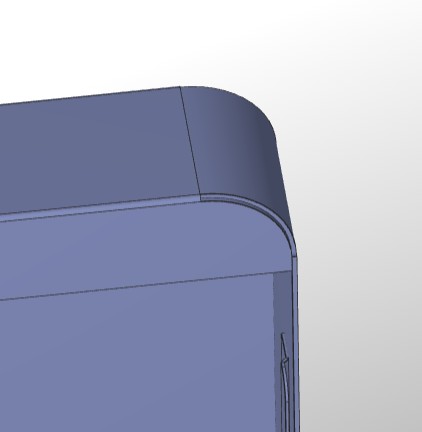
Consideration: Larger Bend Radii

While larger bend radii may be necessary for specific applications, achieving them can introduce challenges, such as tolerances that are more difficult to hold and slower processes that increase the part cost. 

Our Advice: Use Specialized Tooling or Bump Bending

Larger radii typically require specialized tools, which are less precise compared to single-hit tools used for tighter bends. The challenge here involves maintaining tight tolerances; larger radii make it more difficult to achieve tolerances as tight as ±0.010”, often settling for tolerances around ±0.015” to ±0.020”. This difference is generally acceptable since large radii are often used for aesthetic purposes rather than functional precision.

sheet metal forming

When larger radii—6 inches or more, for instance—are needed, single-hit tooling isn’t practical. Instead, our team will deploy a technique called bump bending. This method incrementally forms the desired radius by making multiple smaller bends with a smaller radius tool across the bend plane. While effective, bump bending is more time-intensive and incurs higher costs due to the increased number of hits and processing time required to produce the desired radius. Depending on the material used, the desired thickness, and the number of bump hits, there can be some witness marks from this process that may or may not be desirable. Some of those witness marks can be reduced by grinding the formed surfaces, but again, this requires time and skill to produce.   

Consideration: Flanges and Features Near Bend Lines

Flanges and features located too close to bend lines can distort during sheet metal forming, leading to defects and additional rework. 

Our Advice: Maintain Proper Distance from Bend Lines

Flanges should extend at least four times the material thickness from the bend line to allow for proper engagement with the bottom forming die. The same rule can be applied to any feature, like holes or cutouts placed near a bend line, to prevent deformation during bending. 

Our Advice: Find Additional Work-Arounds

However, when features like holes and cutouts must be positioned near bend lines, additional strategies are needed to ensure the part forms properly, including:

  • Relief cuts: Adding relief cuts around these features that extend through the bend. That way, when the part is formed, the bottom tools avoid the cutout area, ensuring clean and accurate bends.
  • Backer strips: Using a secondary part, or backer strip, made of the same or stronger material provides support during the bending process. While effective, this method increases costs due to the need for additional setup time.
  • Secondary processes: Adding features separately after the bend is complete if they can’t be managed during forming. While this avoids distortion, it increases handling time and costs, making it a less desirable option for high-volume production. 

Design for Success with Nu-Way

Effective sheet metal design requires a deep understanding of the sheet metal forming process and the potential pitfalls that come with it. By incorporating our advice during the product design phase, you can minimize issues, reduce costs, and ensure high-quality results.

At Nu-Way Industries, our team specializes in helping customers navigate these challenges. Our expertise in making sheet metal products ensures your parts are designed for manufacturability, quality, and functionality. 
Ready to get started? Partner with Nu-Way to take full advantage of our contract manufacturing and engineering services.

How Quality Is Embedded in Our Contract Manufacturing Services

At Nu-Way Industries, quality is a mindset, a process, and a promise. We involve quality in every step of our operations, from when we first engage with a project to the moment it leaves our facilities. This rigorous approach ensures that we consistently meet and exceed our customers’ expectations.

Let’s explore how the Nu-Way team builds quality into everything we do.

Quality Starts at the Quote

Quality doesn’t start on the shop floor; it begins at the quoting stage. At Nu-Way, we review every request for quote as if it’s a confirmed order. This means gathering all relevant data, analyzing specifications, and virtually pre-manufacturing the product. By doing this, our team addresses potential challenges and their root causes to minimize any production issues before they arise to ensure we’re fully prepared for production. 

This upfront attention to quality ensures that when quotes become orders, our team is ready to execute with minimal risk and without unnecessary delays. 

Engineering Excellence

Engineering serves as the cornerstone of our contract manufacturing services. We operate in a specification-driven business, and our team understands that we must understand the nitty-gritty details to meet (and exceed) our customers’ expectations. Our engineers evaluate each project upfront, not only making sure we can build it to spec but also ensuring we execute it within customer expectations. For complex projects, we assess risk profiles, addressing each detail and anticipating potential obstacles. 

Confidence with Complexity 

The more intricate the project, the larger the room for error and the higher the stakes. That’s why we prioritize robust planning and preparation for complex work. When parts require tight tolerances or extensive GD&T, our quality and engineering teams work hand in hand to pre-vet the project. This ensures that every requirement fits within our capabilities and meets our high standards. By the time the project reaches the shop floor, our team has already addressed critical questions that can pose risks and introduce delays during production. 

Quality Is in the Eye of the Beholder 

Quality isn’t one-size-fits-all; our customers have unique expectations that go beyond what appears in the paperwork. 

If there’s any ambiguity in the quality documentation, our team works directly with the customer to gain clarity. Sometimes, this happens in the form of visiting local customers’ facilities, walking their floor, and seeing their challenges firsthand. When our customer is more than a hop, skip, and jump away, we can accomplish this in an in-depth phone conversation. 

By clearly understanding our customers’ quality requirements, our team ensures that we deliver a solution that aligns perfectly with their vision. 

Context Drives Quality

At Nu-Way, we understand that the parts we produce are not just standalone items—they are integral components of a larger system. To ensure we deliver the highest quality, our team must look at the full picture. By considering each part’s end use, the challenges it will face, and the role it plays in the final assembly, we can better tailor our process to meet the specific needs of our customers.

This thorough understanding allows us to deliver not only precision and performance but also reliability in the final product. It’s this attention to detail at every stage of production that ensures our customers receive parts that perform optimally and seamlessly within their systems.

For example, if a part must integrate seamlessly with 30 others in a tightly toleranced assembly, we can’t look at it as an individual piece. It’s all about ensuring the entire puzzle fits together perfectly. 

Partner with Nu-Way Industries, Where Quality Is a Non-Negotiable

From the quoting stage to final delivery, the Nu-Way Industries team takes every step necessary to ensure the highest quality. Our team tailors our processes to customers’ specific needs, going beyond what appears in the print. We have a proven track record of success, thanks to our customer-centric approach and talented engineers. 

Are you looking for quality you can count on? Partner with Nu-Way Industries for contract manufacturing services you can trust time and time again. 

Choosing the Right Manufacturing Partner: Key Factors for Long-Term Success

Capabilities and costs are just the tip of the iceberg when selecting the right manufacturing partner. A strategic, enduring partnership should be built on trust, transparency, and a commitment to achieving shared success.

Find a Partner, Not Just a Supplier

Here at Nu-Way Industries, we strongly feel that long-term manufacturing partnerships hold far more value than run-of-the-mill supplier transactions. The stable, productive relationship that occurs when manufacturers and OEMs work collaboratively over a period of time benefits both sides. On our end, we can be more strategic and effective in fulfilling our customers’ needs when we have a comprehensive understanding of their goals and pain points. For OEMs, onboarding new vendors can be a costly and resource-intensive process, involving substantial time and energy. The best course is to invest in a partnership that is built to last. 

Maintaining consistency in manufacturing isn’t just about producing quality end products—it’s about the continuous improvement of processes, the development of teams, and the mutual trust that grows over time. At Nu-Way, our customers know they have a reliable partner they can count on for the long haul, one that’s fully aligned with their business objectives.

Trust: We’re Here For You

There’s a lot at stake when buyers are tasked with selecting the right manufacturing partner. For buyers, selecting a partner who delivers on time and according to specification is critical not only to the project but also to the reputation of the buyer and their business. A delay, miscommunication, or missed quality benchmark can have lasting impacts.  That’s why trust is such a critical element in choosing a partner. 

Our goal at Nu-Way is to make our OEM customers look good for their own clients by ensuring that our deliveries are accurate and timely. Our approach, built on a foundation of open communication and a commitment to top-notch service, shows that we’re here to support our customers every step of the way. They trust our contract manufacturing services from the first order and every interaction thereafter.

Longevity: We’re Here for the Long Haul

Determining the best manufacturing partner is an investment that pays off over time. Changing suppliers requires considerable effort, from reestablishing expectations to training new teams on your unique processes. The learning curve is steep, and it takes time (and legwork) for a new partner to get fully accustomed to your needs.

With long-standing customer-supplier relationships, both parties benefit from a deep understanding of each other’s rhythms and expectations—with no surprises. Rather than finding new suppliers and navigating the hurdles of understanding their cadences, OEMs can instead focus their attention on achieving results and meeting targets when they have a long-term manufacturing partner they can rely on.

Nu-Way Industries has built relationships that have lasted decades—in some cases, over 30 years. We’ve been around the block for quite some time—since 1968, to be exact—and we’ve seen it all. We know precisely what it takes to build and sustain a successful manufacturing partnership.

Transparency: We’re Honest When Challenges Arise

Transparency is essential to any successful relationship—especially within industries where timelines are strict and failure is not an option. In these demanding environments, challenges may arise—but when they do, Nu-Way’s team communicates promptly and clearly. If issues occur, we notify our customers immediately and work with them to find solutions, making informed decisions that keep everyone aligned and on track.

These conversations aren’t fun, but they are necessary. Being upfront with any issues is imperative to building trust and preventing miscommunication that could harm the project or partnership. At Nu-Way Industries, we’re committed to our customers’ success and willing to work through any issues together. 

Partner with Nu-Way Industries for Success Today and in the Future

When you’re deciding on the right manufacturing partner to meet your needs and respond to your challenges, make sure you’re selecting a manufacturer you can rely on today, tomorrow, and in years to come. 

Are you ready to start a partnership based on a foundation of trust, longevity, and transparency? Contact the Nu-Way team to see how we can help. 

Want a Fast, Accurate Quote? Consider These Elements Before Sending an RFQ

When submitting an RFQ (request for quote) to a contract manufacturer, it’s critical to provide the right information to obtain an accurate quote in a timely manner. A complete and detailed RFQ not only streamlines the quoting process but also ensures that the final quote closely aligns with your requirements. It’s important to understand that when we process a quote, we are in essence doing a pre-production engineering review which means we are figuring out exactly how we intend to process the item(s) being requested.

Here are some questions to ask yourself as you’re preparing to send an RFQ:

Are Your Specifications Clear and Complete?

One of the most common issues the Nu-Way Industries team faces when receiving RFQs involves incomplete information. Often, we receive fragments of details that do not provide the complete picture of the product our customers want us to build. It’s essential to make sure that all specifications and requirements are clearly outlined in your RFQ. 

Include Relevant Drawings and Models

Some of our customers, a handful of whom have been sending us parts since the ‘60s, only have access to legacy drawings created decades ago. While we can certainly work from them, and often do, if they are available,  accompanying them with 3D models significantly improves the accuracy of quotes. 3D models provide necessary geometric information that offers deeper insight for our engineering teams.

That said, even the most comprehensive 3D model doesn’t tell the whole story. Important details like material specifications, surface finish requirements, and special treatments like painting, plating, or welding instructions live on 2D drawings. To ensure we fully understand your requirements and deliver the best results, we ask that you include both 3D CAD models and detailed 2D drawings with your RFQ. This combination allows us to serve you more efficiently and accurately by giving our team the full picture.

Utilize Correct File Formats

To avoid delays in quoting, be sure your 3D models are in an acceptable file format before sending them. The Nu-Way Industries team accepts the following formats in our secure RFQ form:

  • – 3D models: Standard mesh (.stl, .3mf), Autodesk (.3ds, .dwf, .dwfx), CATIA V5 (.cgr), CATIA V6 (.3dxml), COLLADA (.dae), FBX (.fbx), Wavefront OBJ (.obj), PRC (.prc), VRML (.vrml, .wrl) 
  • – CAD formats: SolidWorks, Siemens NX, Autodesk Inventor, Parasolid, and ACIS 
  • – MS Office files: bib, csv, dbf, dif, doc, docx, emf, eps, epub, fodg, fodp, fods, fodt, html 
  • – Model-Based Definition files: STEP AP242, JT files, 3D PDFs, and native formats from platforms like SolidWorks, Catia, PTC Creo, and Siemens NX

Are Your Quantities Clear? 

Quantity is another key component that impacts the quoting process. It’s not uncommon for customers to request quotes for various quantities, such as one, 50, or 1,000 units, to explore different pricing scenarios. It is important to note that each of these quantities may call for a different manufacturing approach, making them essentially three distinct quotes rather than a single quote with multiple options. 

Specify Your Expected Order Quantity 

Sometimes, OEM buyers try to find the best pricing by requesting a quote for different quantities. Will it be significantly cheaper to order one batch of 100, or is it worth it to order two batches of 50? To solve this conundrum, they might request multiple quotes, each based on a different quantity.

If you want quotes for multiple quantities, anticipate a longer turnaround time, as quantities result in different production setups – and, therefore, variations in pricing. If speed is a priority, we recommend determining the exact quantity you plan to order and requesting a quote for that specific amount. This will help streamline the process and expedite the quoting process.

Provide Context and Usage Patterns

Context makes a world of difference in custom metal fabrication. Knowing how and where the part will be used, along with your usage patterns, impacts quoting. For instance, if you require 1,000 units but only need 50 per week, Nu-Way’s team is happy to plan production around your specific delivery schedule, optimizing our processes to align with your needs.

Is Your Information Up to Date to Accurate? 

For our custom metal fabrication services, it’s essential that we receive revision levels on your prints. Any special instructions, such as unique welding requirements or surface finishes, should also be clearly outlined and up to date. Ambiguities or missing details can lead to delays, as our team will reach out for clarification to produce the most accurate quote.

Get Fast, Reliable, Secure Quotes from Nu-Way Industries

With our expert team and sophisticated quoting platform, Nu-Way Industries has the combined force of talent and technology to support our customers’ products from quote to completion.
Request a quote today from Nu-Way Industries to get started!

  • « Go to Previous Page
  • Page 1
  • Page 2
  • Page 3
  • Page 4
  • Go to Next Page »

Footer

ABOUT NU-WAY INDUSTRIES

Nu-Way Industries, is your single source, Global reaching, End to End Fabrication Partner, and Display Solutions Provider.

GET IN TOUCH

2301 Lunt Ave

Elk Grove Village, IL 60007

 847.298.7710

SalesDept@nu-way.net

 www.nuwayindustries.com

SERVICES OFFERED

  • Fabrication
  • Product Development
  • Certification & Compliance
  • Supply Chain Management

JOIN OUR COMMUNITY

Sign up to receive email for the latest information.
Loading
  • Company Documents
  • AI Site Guide